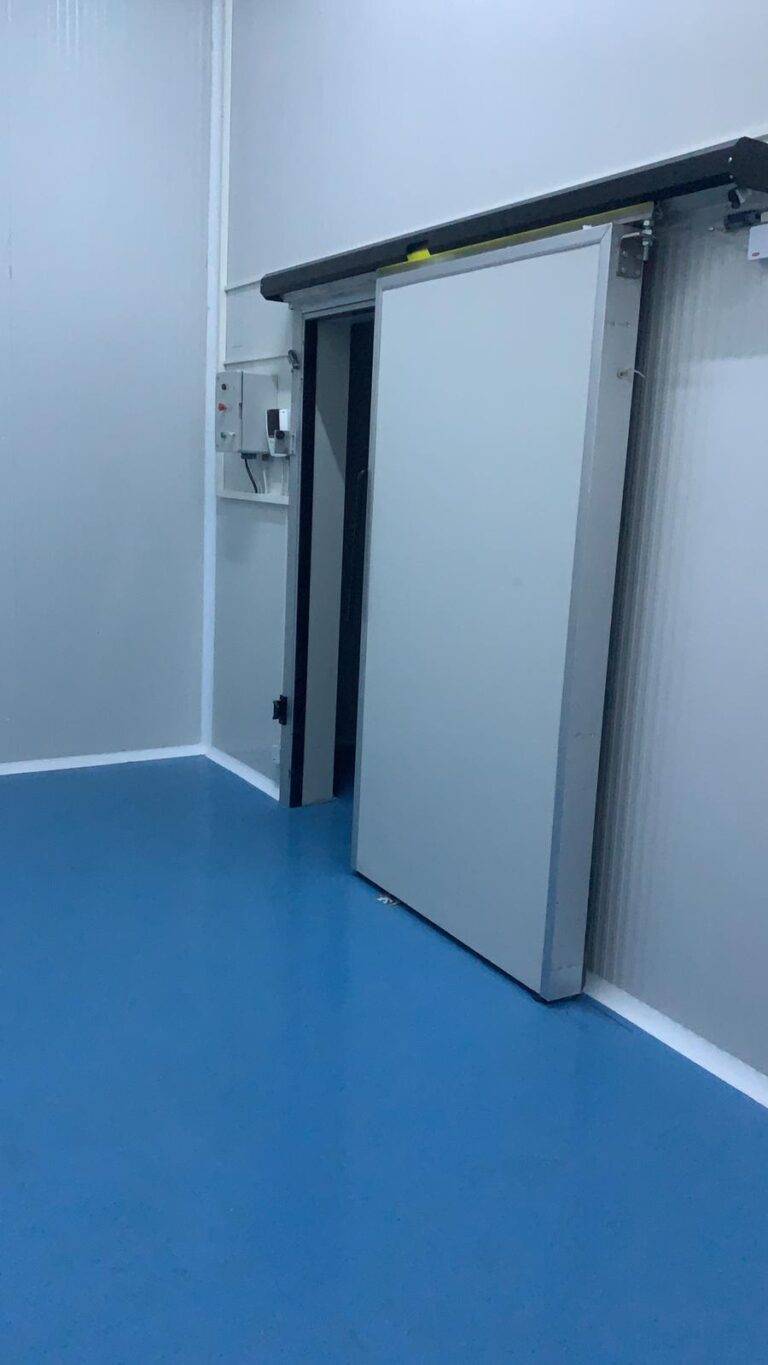

Introduction Cold Room Controllers
When investing in a cold room or industrial cold storage system, most buyers focus on insulation panels, compressor capacity, or overall dimensions. Yet one of the most critical — and most overlooked — components is the controller: the electronic brain that governs every function in the system, from temperature regulation to defrost cycles and alarm management.
Understanding how cold room controller integration works before you purchase a system can save you thousands of dollars in operational costs, compatibility headaches, and unnecessary service calls. In this guide, we break down what a cold room controller does, what the integration process involves, and what to look for when choosing a cold storage manufacturer that delivers fully integrated, ready-to-operate systems.
What Is a Cold Room Controller and Why Does It Matter?
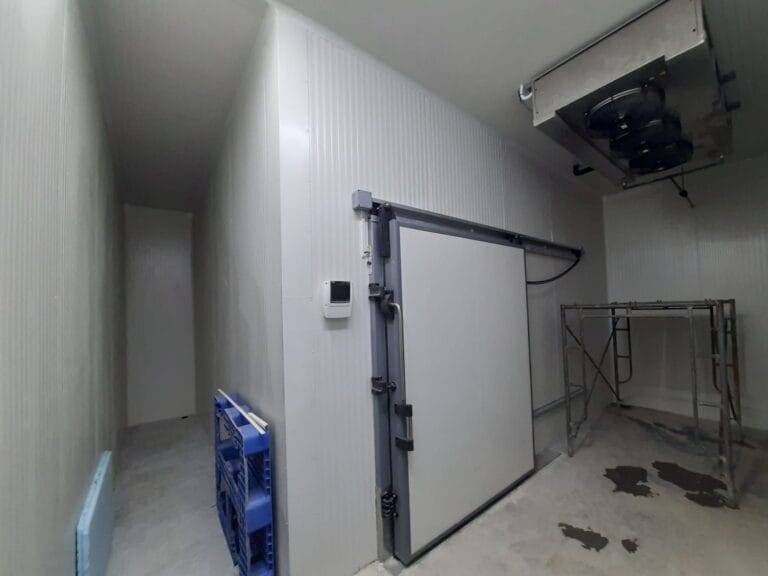
A cold room controller is a microprocessor-based device mounted on the wall of a cold storage unit or panel. It continuously monitors temperature data through sensor inputs and issues commands to the refrigeration components — compressor, evaporator fans, defrost heaters, lights, and alarms — based on pre-programmed parameters.
Without a well-integrated controller, even the most powerful refrigeration unit can fail to maintain stable temperatures, leading to product spoilage, energy waste, or equipment breakdown.
Modern cold room controllers like the Dixell XLR series are designed for medium and low temperature refrigerating units. They typically offer multiple relay outputs — for example, six relay outputs on advanced models — to independently manage the compressor, defrost system (electrical or hot gas), evaporator fans, lighting, alarm relay, and auxiliary relay. This level of control is what separates a professionally engineered cold room from a basic refrigeration box.
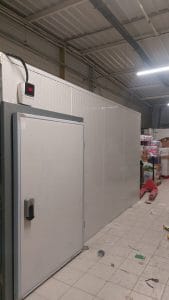
How Cold Room Controller Integration Works
Controller integration is not simply about plugging a device into a wall socket. It involves a carefully coordinated installation process where the controller is wired, calibrated, and programmed to match the specific characteristics of the cold room system it manages. Here is what that process typically includes:
1. Sensor Input Configuration
A properly integrated controller uses multiple sensor inputs. In a typical industrial cold room setup, three NTC or PTC probe inputs are used: one for room temperature control, one for monitoring the defrost end temperature at the evaporator, and an optional third probe for auxiliary display purposes. These sensors must be correctly positioned, calibrated, and mapped to the controller’s parameter list.
2. Relay Output Assignment
Each relay output on the controller is assigned to a specific component. In a six-relay configuration, the outputs are typically mapped as follows: compressor control, defrost initiation, evaporator fan operation, lighting, alarm notification, and an auxiliary output for site-specific functions. Incorrect assignment at this stage leads to operational failures that are difficult to diagnose after installation.
3. Digital Input Mapping
Modern controllers include digital inputs for door switches and configurable contact functions. Door switch integration is particularly important: when a cold room door is opened, the controller should pause fan operation and log the event. This protects product quality and helps with compliance reporting in food safety environments.
4. Defrost Cycle Programming
One of the most technically demanding aspects of controller integration is defrost cycle setup. Controllers with a Real Time Clock module can be programmed for up to eight daily defrost cycles, allowing operators to schedule defrosts during off-peak hours. Hot gas defrost and electrical defrost each require different relay logic and timing parameters, and these must be set correctly for the specific evaporator and refrigerant type in use.
5. RS-485 / Modbus Communication Setup
For facilities that require remote monitoring or integration with Building Management Systems (BMS) or SCADA platforms, the RS-485 output on modern controllers enables Modbus RTU communication. This allows real-time data logging, remote alarm notifications, and centralized management of multiple cold rooms from a single interface. Proper configuration of this communication layer is essential for industrial-scale deployments.
Common Integration Mistakes and How to Avoid Them
Even experienced refrigeration technicians encounter problems during controller integration. The most common issues include:
Sensor placement errors. Placing the room temperature probe too close to the evaporator coil results in artificially low readings and compressor short-cycling. The sensor should be positioned in the return air stream, away from direct cold air discharge.
Incorrect defrost termination settings. If the defrost end temperature parameter is set too low, defrost cycles run too long, wasting energy and potentially damaging the evaporator. If set too high, ice accumulation on the coil reduces airflow and refrigeration efficiency.
Skipping door switch wiring. Many installers omit the door switch input as a shortcut during installation. This is a false economy: without door monitoring, the controller cannot log door openings, cannot pause fan motors during access, and cannot trigger door-ajar alarms — all of which are requirements in food safety and pharmaceutical cold chain environments.
Ignoring RS-485 termination resistors. In RS-485 Modbus networks, missing termination resistors at the end of the communication bus leads to signal reflection and data corruption. This is a common oversight when connecting multiple controllers to a central monitoring system.
What to Look for in a Cold Room Manufacturer
Not all cold room manufacturers deliver systems with fully integrated, pre-configured controllers. When evaluating suppliers, ask the following questions:
Is the controller factory-wired and pre-programmed? A professional manufacturer should deliver a system where the controller is already wired, all relay outputs are correctly assigned, and baseline parameters are pre-set for the intended temperature range. Field wiring by an untrained installer introduces risk.
Does the manufacturer support RS-485 / BMS integration? If your facility has or plans to have a central monitoring system, ensure the cold room manufacturer can configure the controller’s communication output before delivery.
What controller brands and models are used? Established brands with global technical support — widely used in commercial cold rooms across Europe and North America — provide better long-term serviceability than proprietary or no-name controllers. Ask your manufacturer which controllers they specify and why.
Is remote monitoring available? Modern cold storage buyers increasingly expect IoT-enabled temperature monitoring with mobile alerts. A manufacturer that integrates remote monitoring capability at the factory level delivers a significantly more future-proof product.
What are the warranty and service terms for the control system? Controller failure is one of the leading causes of cold room downtime. Clarify whether the manufacturer’s warranty covers the control panel and what the response time is for service calls.
Frigosys: Factory-Integrated Cold Room Systems Built for Global Deployment
At Frigosys, every cold room system we manufacture is delivered with a fully integrated control panel — wired, tested, and pre-configured at our production facility in Turkey before shipment. We work with industry-standard controller platforms trusted by cold chain operators in the USA, Africa, and across Europe, ensuring compatibility with existing monitoring infrastructure and full support availability in the field.
Our engineering team handles sensor placement, relay assignment, defrost cycle programming, and RS-485 communication setup as part of the standard manufacturing process — not as an afterthought on the installation site. This approach minimizes commissioning time, reduces the risk of wiring errors, and gives our clients a system that is ready to operate from day one.
Whether you are building a new cold storage facility, expanding an existing plant, or sourcing a turnkey blast freezer system for export, Frigosys delivers industrial cold room solutions that are engineered for reliability, designed for integration, and supported globally.
Contact Frigosys today to discuss your cold room project requirements.
Frequently Asked Questions
Can I upgrade the controller on an existing cold room? Yes, controller upgrades are possible on most cold room systems. However, the new controller must be compatible with the existing sensor types (NTC or PTC), relay load ratings, and communication protocols in use. A compatibility assessment by a qualified refrigeration engineer is recommended before replacement.
What is the difference between NTC and PTC sensors in cold room systems? NTC (Negative Temperature Coefficient) sensors decrease in electrical resistance as temperature rises, while PTC (Positive Temperature Coefficient) sensors increase in resistance with temperature. Most industrial cold room controllers support both types, but the sensor type must be correctly specified in the controller’s configuration parameters.
How many cold rooms can be monitored from a single BMS? This depends on the Modbus network topology and the BMS software capacity. A single RS-485 bus can typically support up to 32 devices, and with repeaters, this can be extended significantly. Large distribution centers commonly monitor dozens of cold rooms from a single centralized interface.
What refrigerant types are compatible with Dixell-series controllers? Controller compatibility is not refrigerant-specific — the controller manages electrical signals, not refrigerant directly. However, the defrost strategy (hot gas vs. electrical) and the expansion valve type selected for the system must align with the refrigerant in use. Your cold room manufacturer should specify the correct defrost configuration for the refrigerant specified in your project.