
High Ambient Condensing Units for Cold Rooms: 2026 Buyer’s Guide for Extreme Heat
High ambient condensing units for cold rooms are the difference between a cold room that holds temperature in July and one that fails on the hottest afternoon. A cold room in Phoenix, Lagos or Riyadh can only perform as well as the machine that rejects its heat. Once outdoor air passes 43°C (109°F), and often approaches 50°C (122°F) on a sun-soaked roof, standard catalog equipment rated at 32°C (90°F) begins to struggle. As a result, capacity drops, high-pressure trips multiply and compressors wear out years early.
The solution is simple in concept but specific in execution: install condensing units engineered for tropical or desert conditions. This guide explains how high ambient units differ, how to size them, which refrigerants perform best in extreme heat and what to include when you request quotations.
What Are High Ambient Condensing Units for Cold Rooms?
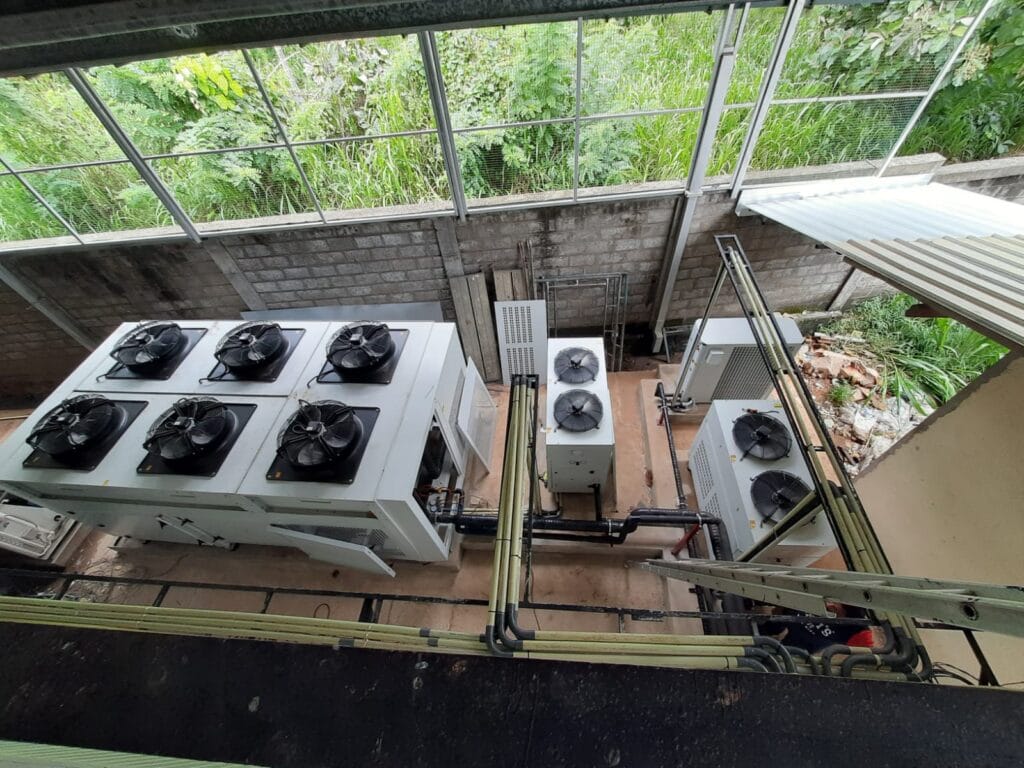
A condensing unit houses the compressor, air-cooled condenser, fans, liquid receiver and controls that reject the heat collected by the cold room evaporator. To release that heat, refrigerant must condense at a temperature typically 10–15 K (18–27°F) above outdoor air. When ambient air rises from 32°C (90°F) to 46°C (115°F), condensing temperature climbs from roughly 45°C (113°F) to nearly 60°C (140°F). The results:
- 20–30% loss of cooling capacity
- Steep increases in power consumption
- High discharge temperatures that stress compressor oil and valves
- Frequent high-pressure cut-outs
High ambient condensing units for cold rooms counter these stresses with oversized condensers, compressors with extended operating envelopes, upgraded components and intelligent fan control. Moreover, major manufacturers publish their limits clearly: “tropical” lines commonly reach 43°C (109°F), “super-tropical” lines 46°C (115°F) and Gulf-grade equipment 52°C (126°F).
Why Standard Condensing Units Fail in Hot Climates
Most brochures list cooling capacity at a mild 32°C (90°F). However, sizing a project on that figure leads to serious undersizing, because every 1°C rise in condensing temperature reduces capacity by roughly 1–2%. In addition, three site factors make the problem worse:
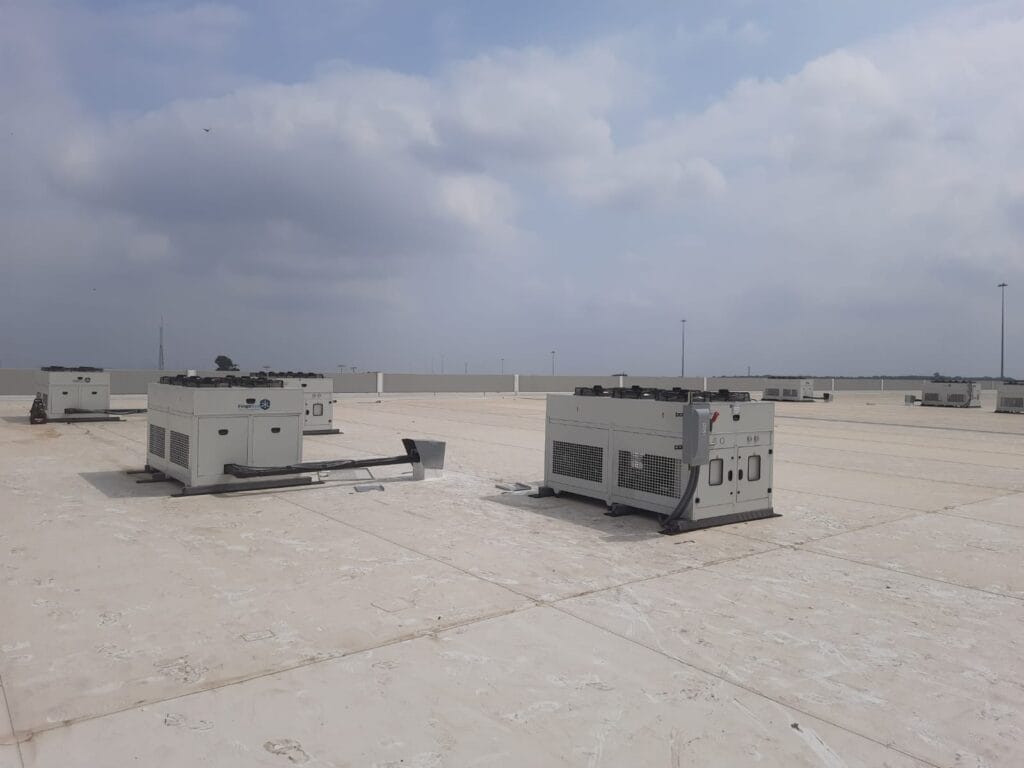
- Rooftop installations: air above a roof can run 5–10°C (9–18°F) hotter than published weather data.
- Recirculation: units installed against walls or clustered together re-ingest their own hot discharge air.
- Fouling: dust, sand and salt clog condenser fins, raising operating pressure week after week.
Regional Peak Design Temperatures
| Region | Typical peak design ambient* | Extra risk |
| U.S. Southwest (Phoenix, Las Vegas, inland California & Texas) | 41–46°C (106–115°F) | Rooftop heat gain |
| U.S. Gulf Coast (Houston, New Orleans, Florida) | 35–38°C (95–100°F) | Humidity, hurricanes, salt air |
| Coastal West & East Africa (Lagos, Accra, Mombasa) | 33–38°C (91–100°F) | Humidity, salt corrosion |
| Sahel & North Africa (Kano, Khartoum) | 42–47°C (108–117°F) | Dust, extreme heat |
| Gulf States | 46–50°C+ (115–122°F+) | Sandstorms, radiant heat |
*Indicative values. Always verify local ASHRAE climatic design data, then add 3–5 K (5–9°F) for rooftops or enclosed plant rooms.
Key Features of High Ambient Condensing Units
A “high ambient” label means nothing without the hardware to match. Therefore, check every quotation for:
- Oversized condenser coil: the main differentiator; a larger surface keeps condensing pressure low.
- Compressor built for heat: semi-hermetic or scroll models, with liquid or vapor injection for low-temperature freezer rooms.
- Enlarged liquid receiver: holds the extra refrigerant volume that shifts into the system at high pressure.
- Heat-rated fans and electrics: IP54 or better enclosures, tropical motor insulation, shaded or ventilated control panels.
- Head-pressure control: electronic or variable-speed fans keep pressure stable from 50°C (122°F) afternoons to cool nights.
- Corrosion and dust protection: epoxy-coated fins and powder-coated cabinets for coastal sites; wider fin spacing and easy-clean coils for dusty sites.
- Power-quality safeguards: phase-sequence relays, voltage protection and soft starters for unstable grids and generators.
Best Refrigerants for High Ambient Cold Rooms
| Refrigerant | High ambient performance | Regulatory outlook |
| R404A / R507A | Operates, but efficiency drops sharply in heat | High GWP; being phased down |
| R448A / R449A | Good efficiency, wide service base | Medium GWP; widely used today, but check GWP limits for new systems |
| R134a / R513A | Very good for medium-temperature rooms; lower pressures | Medium GWP; not suited to freezers |
| R290 (propane) | Excellent thermodynamics; high critical temperature | Ultra-low GWP; charge limits apply |
| R744 (CO₂) | Transcritical in hot weather; efficiency drops | Ultra-low GWP; complex in hot climates |
For most cold rooms operating above 40°C (104°F), R449A, R448A or R290 (in factory-sealed monoblocks) offer the best balance of efficiency, technician familiarity and regulatory safety. In the U.S., the EPA Technology Transitions rule sets GWP limits for new refrigeration systems, so confirm compliance for your application before ordering.
Monoblock vs. Split vs. Central Systems in Hot Climates
| Criteria | Monoblock | Split | Central / rack |
| Room size | Small–medium | Small–large | Large cold storage (500+ tons) |
| Installation | Fast, factory-charged | Field piping and charging | Engineered plant room |
| High ambient resilience | Good if rating matches site | Excellent; condenser can sit in shade | Excellent; redundancy built in |
| Best use | Containerized and remote projects | Agriculture, retail, food service | Distribution centers, logistics hubs |
Split systems offer the most flexibility in hot climates because you decide where the condenser breathes. On the other hand, monoblocks are the right choice where installation speed and portability matter most.
How to Size High Ambient Condensing Units for Cold Rooms
- Calculate the true room load: panel transmission, product load, infiltration, lights, people, motors and defrost.
- Set the design ambient from climate data, then add 3–5 K (5–9°F) for roofs or tight yards.
- Read the manufacturer’s capacity table at that ambient, not the 32°C (90°F) headline figure.
- Apply a runtime factor: design for 16–18 hours of compressor operation per day.
- Consider redundancy: two units at 60–70% capacity each protect perishables if one fails.
Example: A unit advertised at 10 kW (34,100 BTU/h) at 32°C (90°F) may deliver only about 7.5 kW (25,600 BTU/h) at 46°C (115°F). If your peak load is 8.5 kW, choose the next size up or a dual-unit arrangement.
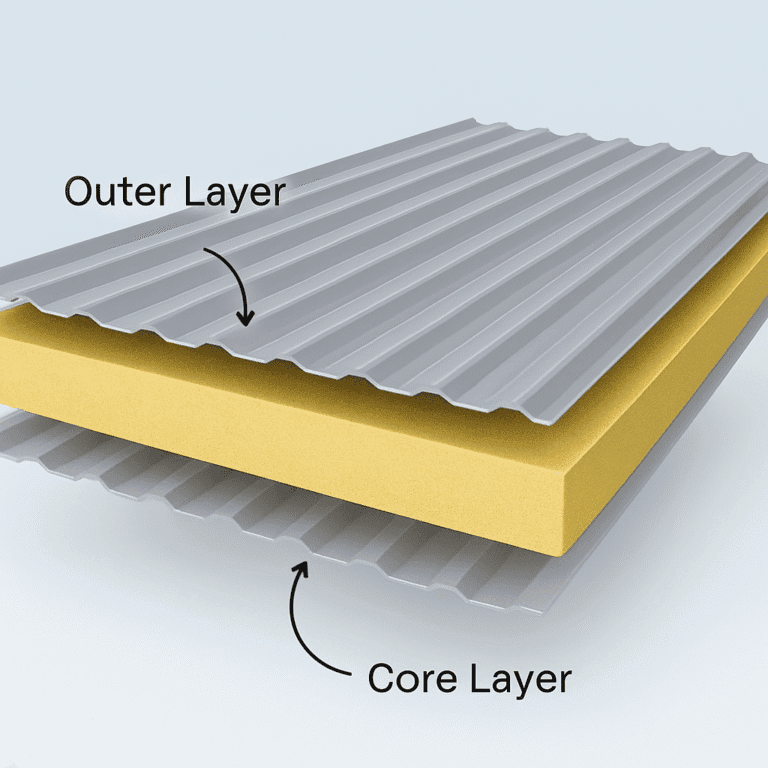
Insulation matters as much as the machine. For example, high-quality PIR sandwich panels reduce transmission load, allowing a smaller, more efficient unit and lowering the cost to build a cold room
RFQ Checklist for High Ambient Condensing Units
Send this information to every supplier:
- Site city, coastal or inland, and installation location (roof, wall, ground)
- Peak design ambient temperature
- Room dimensions, quantity and set-point temperature/humidity
- Product type, daily intake and entry temperature
- Door size and expected openings per hour
- Electrical supply (voltage, frequency) and generator plan
- Preferred or regulated refrigerant
- Redundancy requirement
- Remote monitoring or alarm needs
Suppliers who ask follow-up questions, and refuse to quote from cubic meters alone, are usually the partners who size equipment correctly.
Frigo System’s Approach to Hot-Climate Cold Rooms
Frigo System designs and manufactures complete cold rooms and selects their refrigeration systems for the conditions they will actually face. We size condensing units at the project’s real design ambient, not brochure conditions, and match insulation, doors and cold room controllers in one engineered package, for projects across the U.S. and cold storage in Africa.
Share your project details and receive a heat-load calculation and technical proposal optimized for your site, whether you face coastal salt or desert sand.
Frequently Asked Questions
What ambient rating should a cold room condensing unit have?
Choose the maximum design ambient for your location plus 3–5 K (5–9°F). Coastal Africa and the U.S. Gulf Coast often need 43°C (109°F) units; the Gulf, the Sahel and U.S. deserts require 46–52°C (115–126°F) models.
Can a standard condensing unit simply be oversized?
Oversizing helps with capacity but rarely solves high-pressure trips, oil breakdown or electrical failures. Purpose-built high ambient condensing units for cold rooms remain the safer investment.
How much more do high ambient condensing units cost?
Expect a modest premium, mainly for larger condensers and heat-rated components. Even so, it is far cheaper than a spoiled product load or a compressor replacement in peak season.
Monoblock or split for farms and pack houses?
Split systems allow shaded, ventilated condenser placement, which suits farm pack houses. Monoblocks, in contrast, excel in containerized cold room or remote cold rooms where plug-and-play speed is critical, provided the rating matches local temperatures.
Conclusion: Specify Smart, Protect Your Product
Selecting high ambient condensing units for cold rooms is not about picking the biggest number in a brochure. Instead, it is a calculated process that weighs climate data, load profiles, refrigerant rules and installation conditions. Follow this guide, insist on documented operating envelopes, and your cold room will hold temperature even on the hottest day of the year.
Need guidance? Contact Frigo System for a no-obligation proposal engineered for your exact ambient conditions.