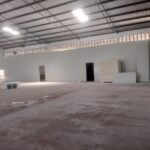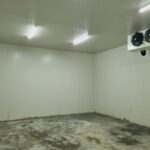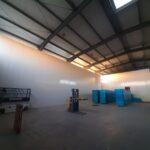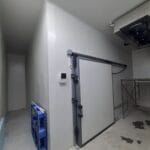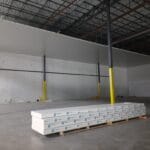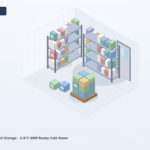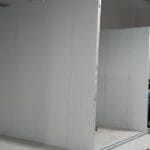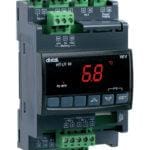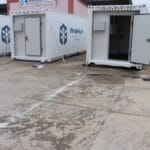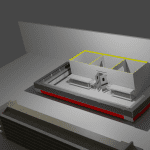


Frigo System supplies cold rooms to West Africa from Turkey. We have already exported to Ghana, Senegal and The Gambia, and in Banjul our own team installed and commissioned a frozen storage plant of about 600 m². Each project is designed around what you store and where you build; the sandwich panels, cold room doors and refrigeration units then travel to you in containers. Typical projects are freezer rooms for frozen fish and chicken, blast freezers, cold rooms for fruit and vegetables, onion stores and complete cold stores.
Cold rooms for West Africa at a glance
| Project in West Africa | Banjul, The Gambia: a frozen storage plant for mixed frozen food, with three rooms at –18 °C and about 600 m² in all |
| Countries we have exported to | Ghana, Senegal and The Gambia in West Africa; Kenya, Tanzania and Uganda in East Africa |
| What we supply | PUR or PIR panels from 60 to 200 mm, doors, refrigeration units, controllers and complete cold stores |
| Delivery terms | Ex works (EXW), or CIF to your port, for example Tema, Dakar or Banjul, with sea freight included; our Banjul plant was delivered CIF Banjul |
| Import certificate | Our shipments to Ghana, Senegal and The Gambia did not need an import conformity certificate such as Kenya’s PVoC |
| Production time | 3–7 weeks on average, depending on the project |
| Payment | Letter of credit (L/C) or bank transfer (T/T), with terms agreed for each order |
| Installation | By our own team, as in Banjul, or by your local team led by our supervisor |
| Warranty and spare parts | 1 year under standard terms; original spare parts supplied within 3–5 days |
| Certification | Our products carry the CE mark |
Our frozen storage project in Banjul, The Gambia
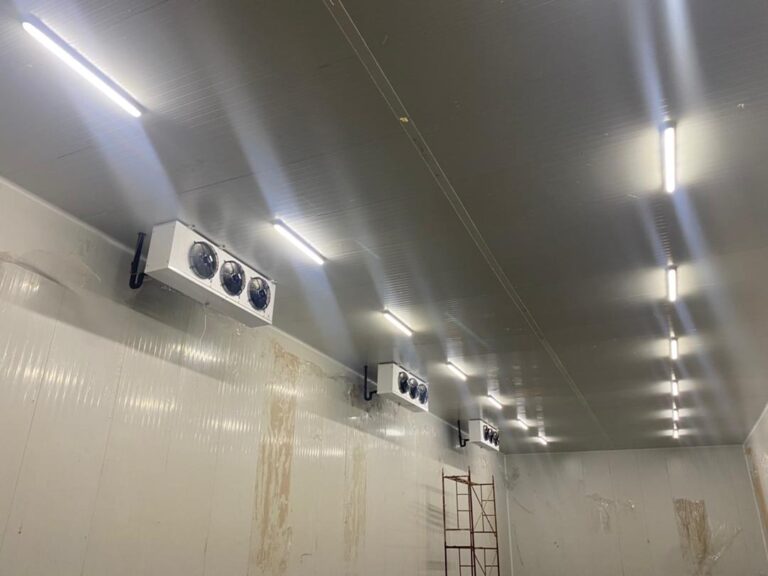
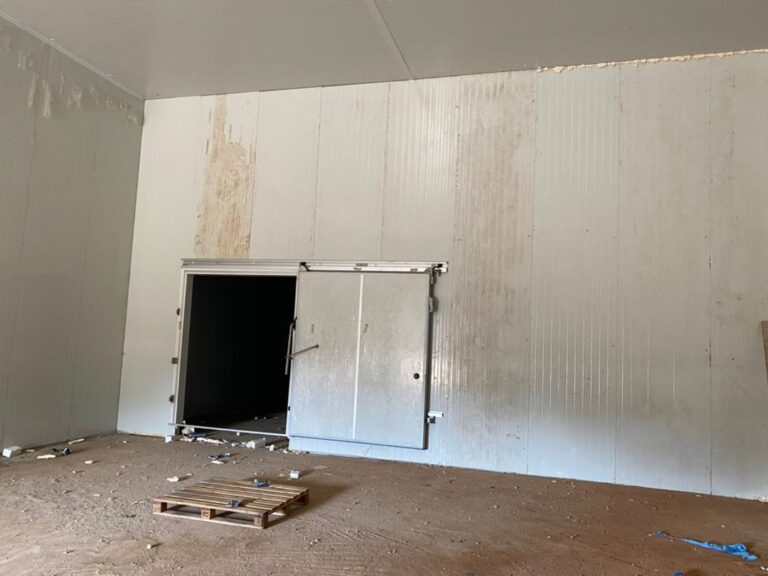
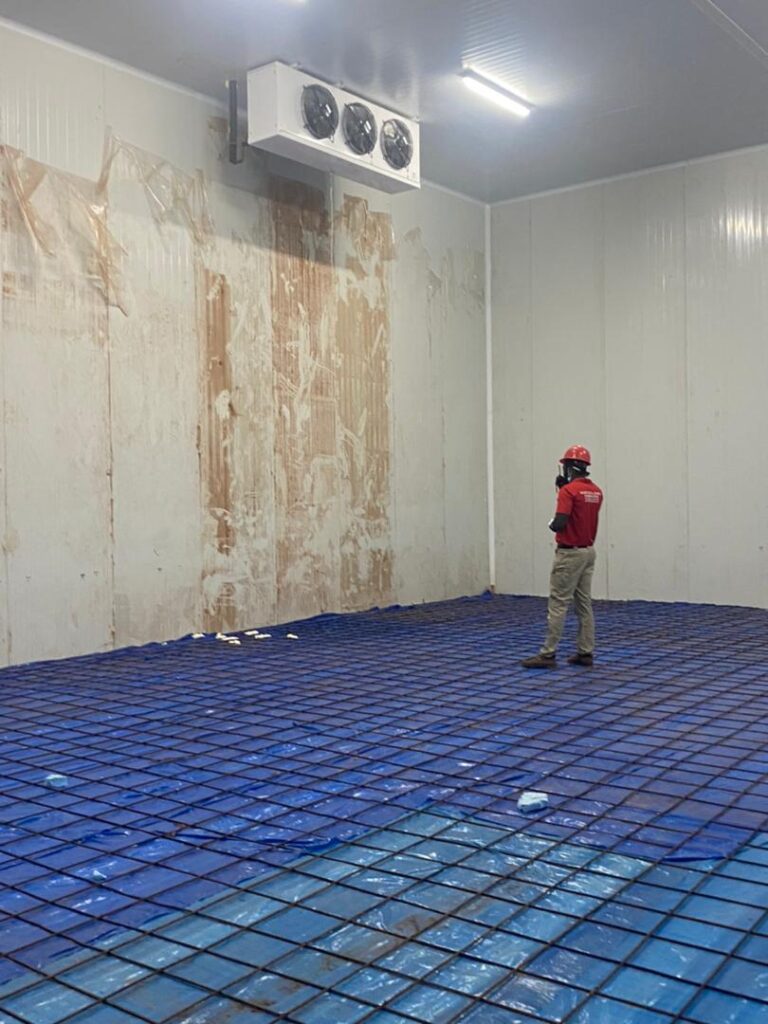
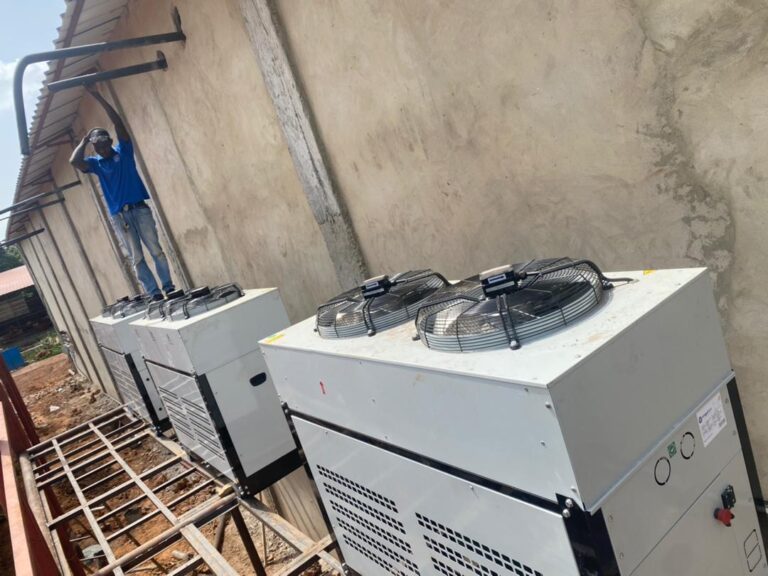
For a customer in Banjul we supplied a frozen storage plant with three cold rooms for mixed frozen food, delivered CIF Banjul. Our own team installed the rooms and commissioned the refrigeration system on site in 2021. At commissioning the rooms reached their storage temperature of –18 °C, measured inside the rooms.
- Rooms: one of 30 × 10 × 6 m and two of 15 × 10 × 6 m (outside dimensions), about 600 m² of floor area in total
- Panels: 120 mm cold room sandwich panels
- Floor: 10 cm of floor insulation laid over a vapour barrier
- Doors and lighting: sliding cold room doors of 200 × 250 cm with a 120 mm leaf and a frame heater, and LED lighting in the rooms
- Refrigeration: evaporators inside the rooms and condensing units with Bitzer compressors outside on a steel platform, connected with copper piping
Our East African projects are described on our pages about cold rooms in Kenya and cold rooms in Tanzania. In all, we have exported to six African countries: Ghana, Kenya, Tanzania, Uganda, The Gambia and Senegal.
Cold storage in Ghana, Senegal and The Gambia
Ghana
Ghana imports large amounts of frozen chicken and fish, and much of it reaches buyers through cold stores in Accra, Kumasi and other towns. Tema is both the country’s main port and a large fishing port. Cold rooms in Ghana mostly keep frozen fish and poultry at –18 °C or colder, while pineapples, mangoes and tomatoes each need a cool room set for that product.
Senegal
Senegal is one of the big fishing nations of West Africa, with Dakar as its main port. Fresh fish needs ice and chilling soon after landing, and fish for later sale needs freezing. Onions, mangoes and green beans are other crops that need storage after the harvest; dry onions keep for months at 0 °C, as our guide to onion cold storage explains. French-speaking buyers can read this page in French: chambres froides en Afrique de l’Ouest.
The Gambia
In The Gambia, fish from the coast is a main product for cold storage, and frozen goods arrive through the port of Banjul. Our frozen storage plant in Banjul keeps mixed frozen food in three rooms at –18 °C.
Starting a cold store business in Ghana
In Ghana a cold store is often a shop that sells frozen fish, chicken and meat. Many begin with chest freezers and move to a walk-in freezer room as sales grow, because a cold room holds more stock at a steady temperature.
- A shop: a modular freezer room with a monoblock refrigeration unit, which comes as one piece and is quick to install.
- A wholesale cold store: larger freezer rooms with split condensing units, and sliding doors wide enough for pallet trucks.
- Temperatures: –18 °C or colder for frozen fish and chicken, and a separate chiller room at 0–4 °C if you also sell fresh fish.
- Price: it follows from the inside size, the temperature, the panel thickness and the refrigeration unit. Our cold room calculator gives a first estimate of the cooling load.
What we supply for cold rooms in West Africa
- Cold room sandwich panels in PUR or PIR from 60 to 200 mm for walls and ceilings, and floor panels for freezer rooms
- Cold room doors: sliding doors for pallet traffic, hinged doors for small rooms, high-speed PVC and industrial doors
- Refrigeration systems: monoblock and split units, condensing units and central systems for large stores
- Blast freezers for fish, chicken and meat
- Container cold rooms and industrial cold rooms
Compressors come from Bitzer, Dorin, Frascold, Copeland and BOCK, electrical components from ABB, Schneider and LG, and controllers from Dixell and Eliwell.
Storage conditions for West African products
Each product has its own temperature and humidity, and fish, fruit and vegetables lose quality fast in a room set for something else. The table gives typical storage conditions and approximate storage life from the product data of our cold room calculator, based on USDA Agriculture Handbook 66, UC Davis, FAO and GCCA sources.
| Product | Temperature | Humidity | Storage life |
|---|---|---|---|
| Fresh fish | 0–4 °C, best at 0 °C in ice | – | 1–2 weeks, by species |
| Frozen mackerel and tuna | –18 °C or colder | – | 4–10 months at –18 °C, about twice as long at –23 °C or colder |
| Frozen chicken | –18 °C or colder | – | About 12 months |
| Mango (mature green) | 12 °C (10–13 °C) | 85–90 % | 2–4 weeks |
| Pineapple | 7 °C (7–13 °C) | 85–95 % | 7–10 days when ripe, 2–4 weeks when picked at colour break |
| Banana (green) | 14 °C (13–15 °C) | 90–95 % | 1–4 weeks |
| Tomato (mature green) | 15 °C (10–21 °C) | 90–95 % | 2–5 weeks |
| Onion (dry) | 0 °C | 65–75 % | 1–9 months |
| French beans | 5 °C (4–7.5 °C) | 95–100 % | 7–12 days |
| Sweet potato (cured) | 14 °C (13–15 °C) | 85–95 % | 4–7 months |
Mangoes, pineapples, bananas, tomatoes and sweet potatoes suffer chilling injury below their range, so they cannot share a room with onions at 0 °C. Onions also need dry air, while French beans need air close to saturation. Our guide to cold storage of fruit and vegetables covers more products.
Blast freezers for fish and poultry
Fish and chicken that are frozen locally should pass through a blast freezer before they go into the freezer store; a freezer store at –18 °C is built to hold frozen product, not to freeze it. Our blast freezer rooms run at –35 to –40 °C behind 200 mm PUR or PIR panels. For smaller businesses, Freezone Mini (AFM) units freeze 45 to 1,000 kg of product a day, and Freezone (AF) units are sized for industrial plants. Our guides to blast freezer rooms and blast freezer rooms for chicken and poultry explain the design, and our page on fish cold storage and freezing covers the fish chain.
Planning a cold room in West Africa
- Climate: Accra, Dakar and Banjul are warm and humid on the coast, and inland Senegal and northern Ghana get very hot in the dry season. We select the condensing units for the hottest weather at your site; see why in our guide to high ambient condensing units.
- Power supply: in Ghana and The Gambia the low-voltage grid supplies 230 V single-phase and 400 V three-phase at 50 Hz, and Senegal’s grid also runs at 230 V and 50 Hz. Larger refrigeration units need a three-phase connection, so tell us what your site has.
- Power cuts: a standby generator sized for the refrigeration keeps the rooms running. Thick panels and doors kept shut slow the rise in temperature while the power is off.
- Products and daily intake: what you will store, the daily intake and its temperature on arrival. These figures set the size of the refrigeration.
- Separate rooms: frozen and chilled products need their own rooms, and so do onions and tropical fruit.
- Height: a taller room stores more on the same floor area; the Banjul rooms are 6 m high. See our guide to cold storage design.
Delivery to West Africa: from order to installation
- Quotation: ex works (EXW), or CIF to your port with sea freight included.
- Payment: by L/C or T/T; the terms are agreed for each order.
- Production: on average 3–7 weeks, depending on the size of the project.
- Packing and loading: panels, doors and refrigeration units are packed at our factory and loaded into 40 ft containers; a cold store the size of the Banjul plant, about 600 m², needs about 4–5 containers.
- Documents: commercial invoice, packing list, installation plan, user manual, certificate of origin, bill of lading and the required quality certificates. Our shipments to Ghana, Senegal and The Gambia did not need an import conformity certificate such as Kenya’s PVoC; import rules can change, so your clearing agent should confirm which documents customs needs.
- Installation: our own team installs and commissions the cold store, as in Banjul, or our supervisor leads your local team.
- After installation: a 1-year warranty under standard terms, and original spare parts supplied within 3–5 days.
A CIF price includes sea freight to your port only. Customs clearance, import duties and inland transport to your site are paid separately.
What does a cold room cost in West Africa?
The price depends on the size, temperature, panel thickness, doors, refrigeration and installation. Our Banjul plant gives a reference for the region: three frozen rooms of about 600 m² at –18 °C cost about €160,000 ex works at today’s prices, with installation and commissioning included, and sea freight to your port comes on top. A single freezer room for a shop costs a fraction of that. The 10 factors behind a cold room price are set out in our cold room price guide.
Frequently asked questions
Do you deliver cold rooms to Ghana, Senegal and The Gambia?
Yes. We have exported to all three countries, and in Banjul our own team installed a frozen storage plant of three rooms and about 600 m².
Who installs the cold rooms?
Our own team installs and commissions it, as it did in Banjul, or we send a supervisor to lead your local team.
Which port do you deliver to?
We quote ex works or CIF to your port, for example Tema in Ghana, Dakar in Senegal or Banjul in The Gambia. Our Banjul plant was delivered CIF Banjul.
How long does delivery take?
Production takes 3–7 weeks on average, depending on the project, and the sea voyage to your port comes on top of that.
Can you build a small cold room for a cold store shop?
Yes. A modular freezer room with a monoblock unit suits a single shop, and we also build large stores like the one in Banjul.
Will the cold room cope with the heat and with power cuts?
The condensing units are selected for the summer temperature at your site. During a power cut, well-insulated panels and closed doors hold the cold for a while, and a standby generator keeps the refrigeration running.
Do you have information in French?
Yes. This page is available in French as chambres froides en Afrique de l’Ouest, and our page on cold rooms in Africa as chambres froides en Afrique.